
The dilemma of modern workspaces
In an era of remote working, flexible offices and new management approaches, companies are rethinking their work environments.
The choice between open-plan and private offices is becoming a strategic decision, influencing collaboration, concentration and employee well-being.
How do you determine the layout best suited to your needs? This article guides you in making an informed choice.
Defining the concepts
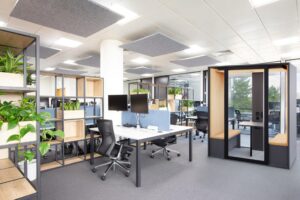
Open-plan office or open space
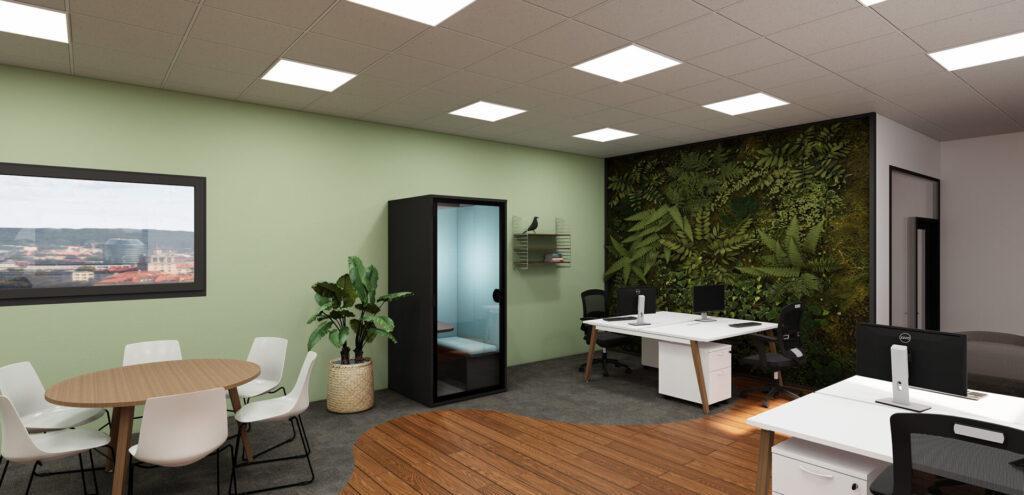
An open-plan office is an open-plan space where workstations are grouped together without physical partitions. This type of layout promotes communication, collaboration and flexibility. It is often adopted to optimise the use of space and reduce fit-out costs.
Enclosed office
An enclosed office is a partitioned space, either individual or shared, offering greater privacy and tranquillity. It allows for better concentration and is often preferred for tasks requiring confidentiality or sustained focus.
Advantages and disadvantages of the open-plan office
The benefits of the open-plan office
Easier communication: the absence of partitions encourages spontaneous exchanges and strengthens team cohesion.
Flexibility: open spaces are easily adaptable to suit the changing needs of the business.
Cost reduction: fewer partitions mean savings on fit-out and maintenance.
Dynamic atmosphere: an open environment can stimulate creativity and innovation.
The disadvantages of the open-plan office
Noise and distractions: the lack of soundproofing can hinder concentration and increase stress.
Lack of privacy: it is difficult to hold confidential conversations or concentrate on complex tasks.
Sensory overload: constant noise and commotion can lead to increased mental fatigue.
Advantages and disadvantages of the closed-plan office
The benefits of the closed-plan office
Optimal concentration: a quiet environment promotes productivity and the quality of work.
Privacy: ideal for sensitive meetings or important calls.
Personalisation of the space: employees can adapt their environment to their preferences.
Fewer interruptions: fewer distractions encourage deep work.
The disadvantages of the closed-plan office
Isolation: a lack of interaction can lead to feelings of loneliness and disengagement.
Less collaboration: informal exchanges are less frequent, which can hinder innovation.
Higher fit-out costs: partitions and additional equipment increase expenditure.
Less flexibility: partitioned spaces are more difficult to reconfigure as needed.
Impact on productivity and well-being
The choice of layout directly influences employee performance and job satisfaction.
The open-plan office stimulates creativity and responsiveness, but distractions can reduce concentration and increase stress.
The closed-plan office promotes concentration and deep work, but can limit social interaction and collaboration.
It is essential to balance these aspects to maximise productivity whilst safeguarding employees’ well-being.
Factors to consider when making a choice
Nature of tasks: activities requiring collaboration benefit from open-plan spaces, whilst tasks requiring concentration are best carried out in private offices.
Employee profiles: extroverts may prefer open-plan spaces, whilst introverts are more comfortable in quiet, private environments.
Corporate culture: a hierarchical organisation may favour private offices, whereas a flat hierarchy favours open-plan spaces.
Budget constraints: open-plan spaces are generally cheaper to set up, but can lead to hidden costs linked to reduced productivity or absenteeism.
Towards a hybrid solution: the modular office
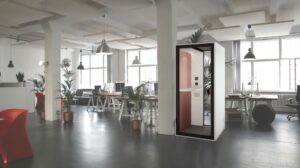
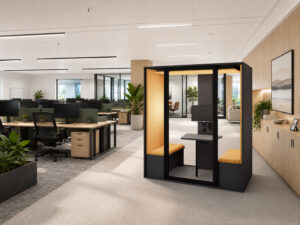
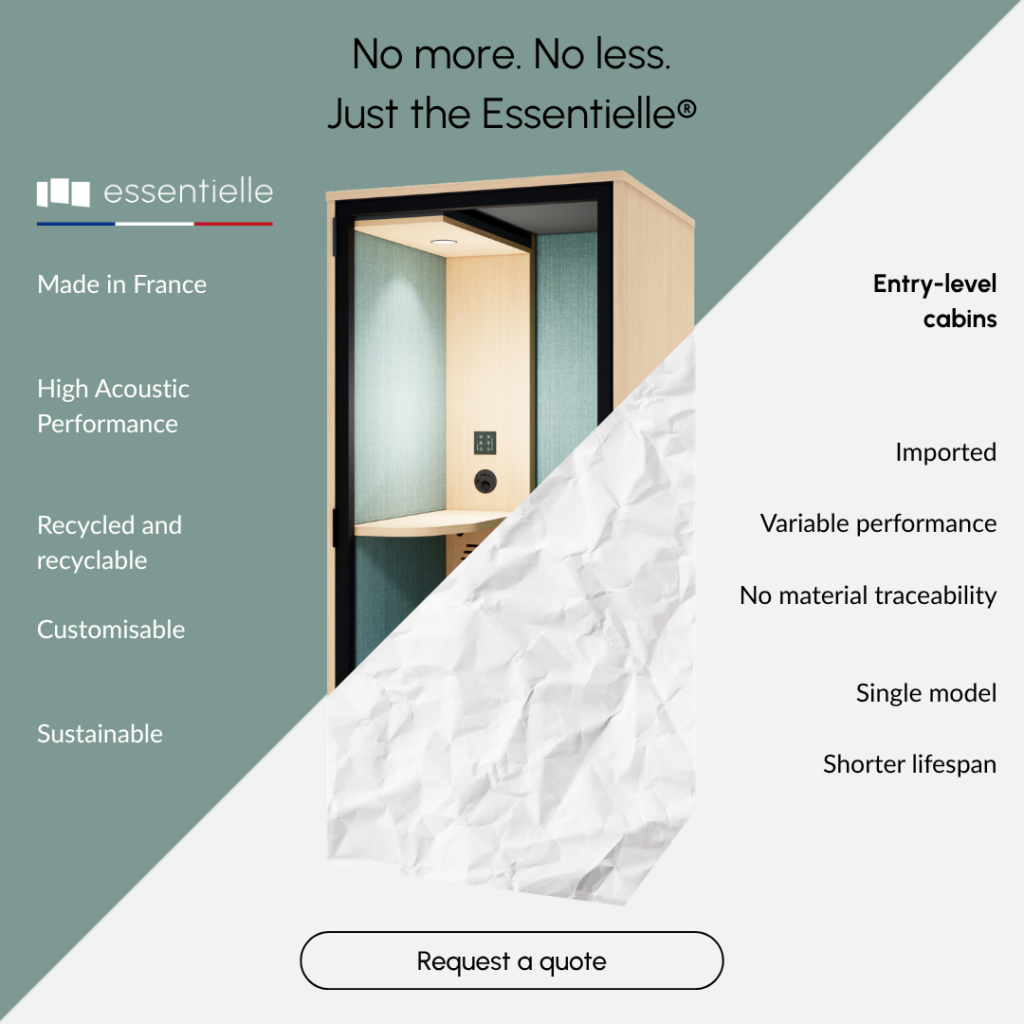
More and more companies are opting for hybrid layouts, combining the advantages of open-plan and private offices. This may include open-plan spaces supplemented with soundproof booths for calls or tasks requiring concentration. This flexibility allows companies to meet the varied needs of employees and adapt the space according to projects and teams.
The choice between open-plan and private offices depends on many factors, including the nature of the work, the profile of the employees and the corporate culture. A flexible approach centred on employees’ needs is essential for creating a working environment conducive to productivity and well-being.
Considering hybrid solutions can offer the best of both worlds, combining collaboration and concentration.