
Flexible working addresses a very real current trend: offices are being occupied full-time less and less, particularly with the widespread adoption of remote working.
It offers significant flexibility. It helps reduce property costs and makes workspaces more dynamic.
This article provides a step-by-step guide to successfully implementing this new way of working.
A detailed assessment of your business
Before redesigning your offices, take the time to analyse how the space is actually used. Identify attendance patterns, workstation utilisation rates, and distinguish between user profiles:
some are mobile,
others are based in one place or a mix of both.
At the same time, gather their needs: do they need quiet to concentrate, discussion areas to collaborate, or relaxation spaces to unwind after an intense work session?
A clear and engaging charter
To ensure a successful transition, set clear rules from the outset. For example, introducing a daily clean-desk policy helps keep spaces tidy and respectful.
Divide areas according to their purpose:
collaborative space,
quiet zone,
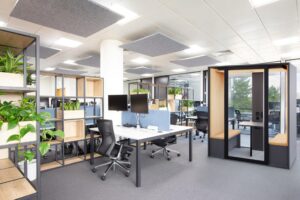
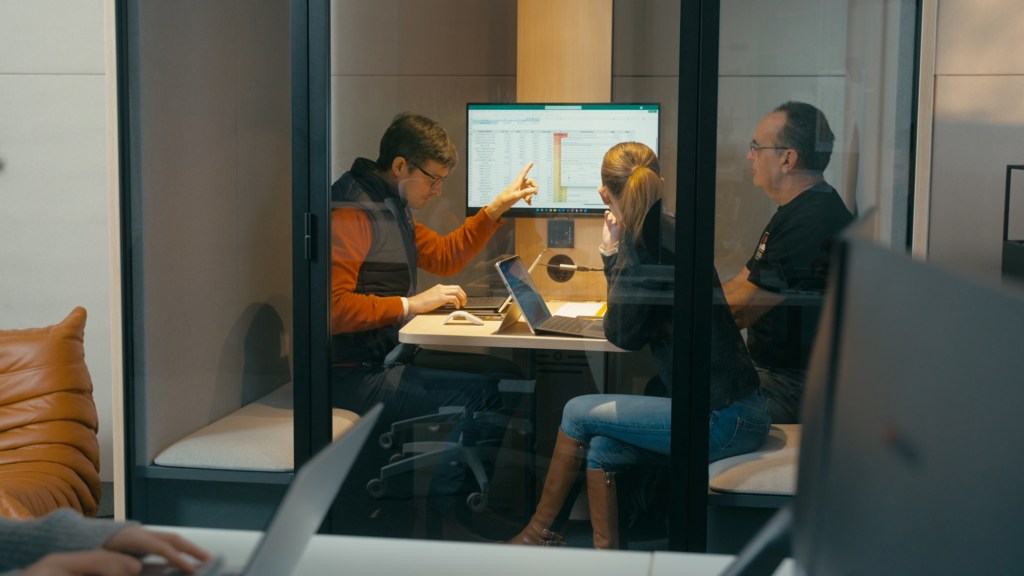
soundproof booth for calls.
Ensure teams understand how each space is to be used through information sessions, internal newsletters and clearly visible signage.
Spaces tailored to their purpose
A good flex office relies on a reimagined layout. Set aside spaces for active collaboration, where teams can interact whilst standing or sitting. Provide concentration zones, equipped with ergonomic chairs and minimal visual or auditory distractions.
Where possible, create relaxation areas with comfortable armchairs or a small café, offering a space to relieve mental pressure.
Finally, install shared storage, such as lockers or cupboards, to avoid permanent clutter on desks.
Digital space management
A mobile and web-based booking tool allows employees to book a workstation or a room in just a few clicks.
Adding digital displays at the entrance to zones or rooms improves the visibility of real-time availability.
Integrating occupancy sensors will provide you with objective usage data, which is essential for subsequently adjusting the layout of the zones.
Buy-in through support
The success of the flex office depends on collaboration and buy-in from teams. So launch co-creation workshops or pilot phases to design the spaces together.
Train your managers: their role must evolve towards that of a facilitator rather than a supervisor.
Implement regular monitoring through satisfaction surveys and regular reviews, and continuously adjust your organisation to avoid a loss of trust.
Ergonomics for well-being
The quality of your workspace also depends on adapting to physical needs. Provide adjustable desks (sit-stand) and ergonomic chairs to protect your employees’ health.
Raise awareness of posture through short training sessions or informative posters to prevent musculoskeletal disorders.
Effective solutions against noise
Noise pollution is one of the main obstacles to the flex office. Installing acoustic wall panels or sound-absorbing ceilings helps to dampen ambient noise.
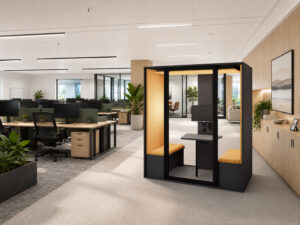
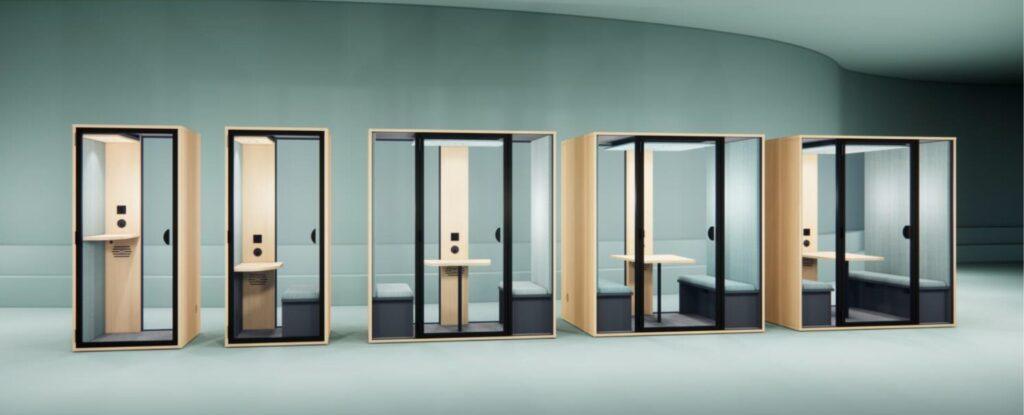
However, for a truly quiet space, acoustic booths or phone booths are the ideal solution.
They provide a secluded area, perfect for calls or video meetings, without having to partition off the main space.
Technology and environmental commitment
The modernised flex office relies on technology. Smart sensors optimise cleaning, lighting and heating based on actual occupancy. To ensure consistency, choose environmentally friendly furniture: FSC-certified materials, recycled fabrics, circular design.
These choices help improve your company’s image whilst raising awareness amongst your staff.
A cycle of continuous improvement
An effective layout must adapt to usage. Regularly analyse key indicators — occupancy rates, user feedback, noise levels — and adjust your layout accordingly.
Communicate your progress to encourage buy-in and promote best practices within your organisation.
In conclusion: successfully implementing a flex office involves combining a precise assessment, appropriate zoning, clear rules, effective digitalisation, human support, an ergonomic approach, controlled acoustics and a commitment to environmental responsibility.
All this, whilst keeping your teams at the heart of the project.