
Creating a quiet space in an open-plan office has become essential. Between phone calls, meetings and background noise, the need for acoustic privacy is a must in modern offices.
But when it comes to setting up a soundproof booth, one question often arises: should you build it yourself or invest in a prefabricated model?
Each option has its advantages and limitations. One focuses on customisation and lower costs, the other on reliability, durability and immediate comfort.
Why consider this choice?
Open-plan offices have transformed the way we work. They encourage interaction, but also expose us to a constant level of noise. Between conversations, notifications and video conferences, it becomes difficult to concentrate for long periods.
Soundproof booths meet this need for privacy. They offer an isolated space, equipped with ventilation and lighting, where you can make a call or hold a meeting without disturbing others.
Some, however, opt for the DIY (Do It Yourself) route, building their own booth. The main argument: cost.
Building your own booth seems more economical… at least on the surface. But beyond the price, you must consider the time, technical complexity and acoustic performance required.
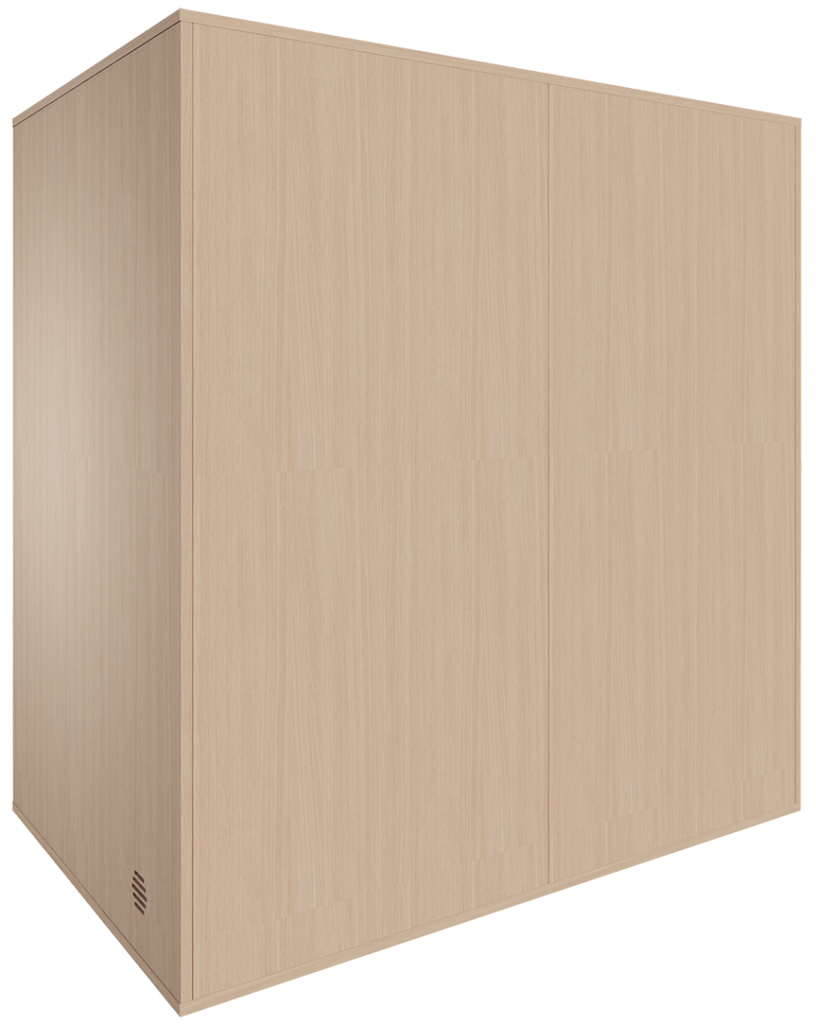
Building it yourself: advantages, constraints, budget
Key construction stages
Building an acoustic booth is a real miniature construction project. The main stages:
- Structure and walls: timber or metal frame, OSB or plywood panels, with the addition of insulation such as rock wool.
- Base and ceiling: mounted on an insulated base to prevent vibrations and noise transmission.
- Door: glazed or solid, with weatherstripping to prevent sound leakage.
- Ventilation: an often-overlooked aspect, but essential to prevent heat build-up and stuffiness.
- Electrical work and lighting: ensure safe connections and suitable LED lighting.
These steps require precision, the right tools and expertise. A simple misalignment or air leak can drastically reduce the sound insulation achieved.
Materials and techniques to be aware of
DIY enthusiasts generally use plywood, OSB, rock wool or acoustic foam. These materials offer good value for money, but their effectiveness depends on how they are installed. A good installation is based on the ‘mass-spring-mass’ principle: two dense walls separated by a flexible insulator that breaks sound transmission.
Specialist forums also highlight the importance of sufficient weight to prevent resonance, and perfect sealing around the joints.
Budget and estimated time
In terms of cost, a DIY booth for one person can run to several thousand euros in materials, plus ventilation, lighting and finishing touches.
But beyond the budget, time is the real constraint. Between the design, purchasing materials, cutting and assembly, construction can take several days, or even a week. And without experience, there is a real risk of having to redo certain parts.
Points to watch out for and common mistakes
Feedback on acoustics and recording forums is unanimous:
Poorly designed ventilation leads to heat and condensation.
The absence of an insulating base encourages vibrations.
Poorly fitted joints allow noise to pass through.
And above all, the booth quickly becomes too heavy or difficult to move.
Building an acoustic booth yourself can be rewarding, but requires time, skill and a great deal of precision.
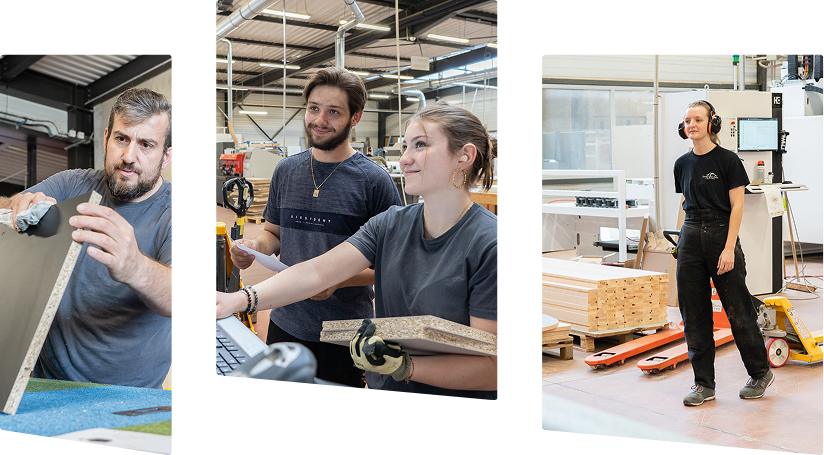
Buying a prefabricated model: the benefits and what to check
Quick installation: the efficiency of a turnkey solution
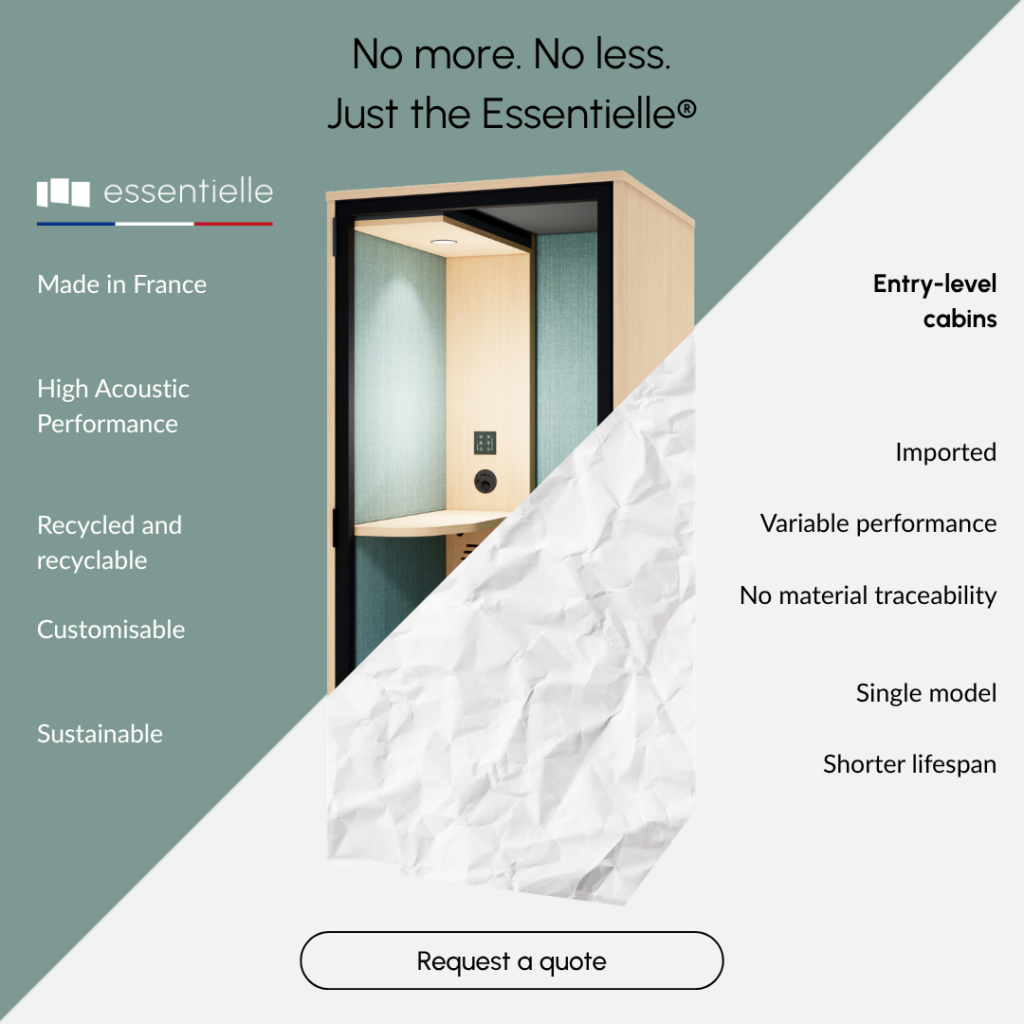
One of the major advantages of the prefabricated model is its ease of installation. The booths in the Essentielle range, manufactured in France, can be assembled in under an hour, without heavy work or complex tools.
Once in place, they are immediately ready for use: simply plug them in to enjoy a perfectly insulated, ventilated and lit space.
This time saving is invaluable for businesses looking to quickly fit out their premises without disrupting their operations.
Built-in ergonomics, insulation and comfort
Prefabricated soundproof booths are designed down to the smallest detail:
- Integrated and silent ventilation, for constantly fresh air.
- Adjustable LED lighting, integrated USB and mains sockets.
- Premium materials offering insulation of up to -30 dB depending on the model.
These features are difficult to replicate in a DIY installation. The user experience, thermal comfort and design are optimised right from the design stage.
Costs, durability and professional image
A prefabricated model represents an investment, but it guarantees:
- a long service life,
- a secure installation,
- a polished professional image.
The booths in the Essentielle range, for example, are manufactured in France using sustainable and recyclable materials. They are demountable, relocatable and designed to adapt to changes in a workspace.
Key considerations before purchasing
Before buying, there are a few points worth checking:
- Ventilation flow rate (for prolonged comfort of use).
- Sound insulation level guaranteed by testing.
- Ease of assembly/disassembly.
- The warranty and after-sales service.
- The design and modularity depending on the available space.
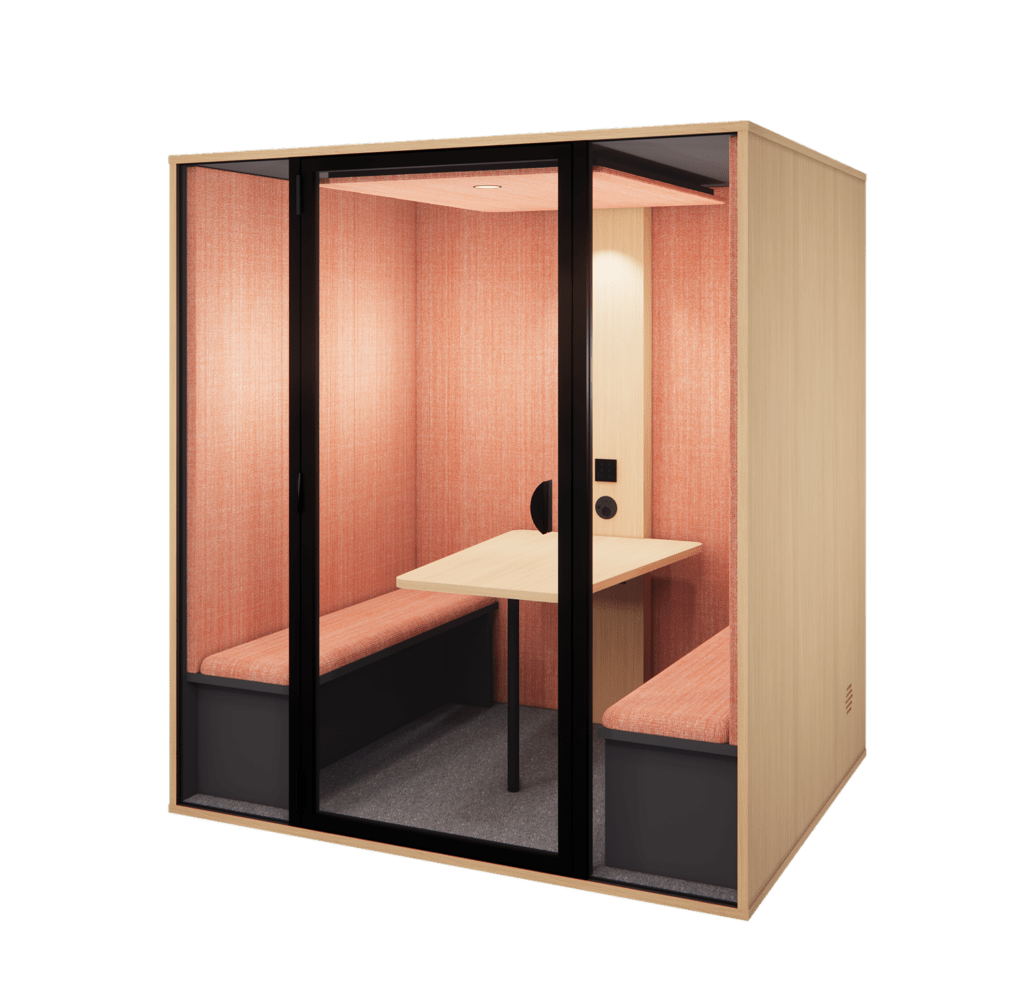
Recommendation based on usage
- Occasional use, limited budget → a DIY build may be suitable, provided you are willing to accept some acoustic compromises.
- Professional use, open-plan office, frequent video conferences → a prefabricated booth such as Essentielle remains the best choice.
Conclusion
Build or buy? It all depends on time, budget and performance requirements. One thing is certain: the quality of ventilation, insulation and thermal comfort must remain central to the decision.For professional use, where silence and reliability matter, Essentielle booths offer the best balance, accessible to all.